


Social Innovation and Impact Institute (Si3)


Tigist is currently the Executive Director and Senior Economist of the Social Innovation and Impact Institute (Si3). Prior to this role, she was also a development economist at the World Bank in Washington, DC. Her expertise spans poverty analysis, agriculture, social protection, digitization, AI-enabled decision support tools, and gender & development. She holds a Ph.D. in Economics from Maastricht University in the Netherlands and has received numerous prestigious fellowships and research grants with policy impact. She was a Visiting Research Fellow at the Centre for Effective Global Action (CEGA) at UC Berkeley and is a member of the Network for Impact Evaluation Researchers in Africa (NIERA), based in Nairobi, Kenya. Her research has been published in peer-reviewed journals, policy briefs, and conference proceedings, including the Journal of Agricultural Economics, the American Economic Association Annual Meeting, and the Organization for Economic Co-operation and Development (OECD).
John Bosco, PhD in Statistics, is a Senior Lecturer at Makerere University and a collaborative researcher at the Social Innovation and Impact Institute (Si3). With over 15 years of experience in survey design and management, his research interests span public health, disability, agriculture, education, forced displacement, poverty, and climate change. He has collaborated with national and international organizations on various evaluations, including impact assessments across East Africa in Tanzania, Rwanda, South Sudan, and Uganda. A visiting scholar at the University of California, Berkeley, he served as Principal Investigator for a randomized controlled trial on ORS use in Uganda, funded by UC Berkeley and the Weiss Family Program Fund at Harvard University, resulting in publications in Development Economics, PLOS One, and Health Policy and Planning. In 2018, he contributed to the “Bridging the Gap” study on disability in Uganda, Kenya, Zambia, and Sierra Leone, presented in London. Currently, he is a Co-investigator on a four-year Hewlett Foundation-funded project, “Impact Evaluation Evidence to Guide Policy Decisions (IEED),” at Makerere University.
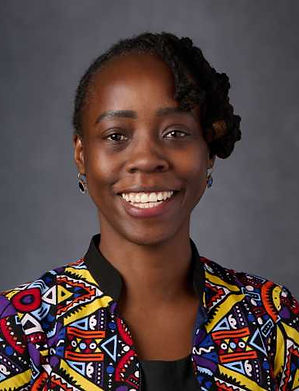
Laura is a Senior Lecturer in the Department of Economics and Development Studies at the University of Nairobi, and country representative of the Social Innovation and Impact Institute (Si3) in Kenya. She holds a PhD in Economics from Radboud University Nijmegen, Netherlands. Laura is also a certified European Investment Bank–Global Development Network fellow in applied development finance and serves as the country representative for the Social Innovation and Impact Institute (Si3) in Kenya. Her research interests include innovation, agriculture, poverty, climate change, and gender. She has published in leading journals such as Research Policy and the Journal of Agricultural Economics. Laura is affiliated with the African Economic Research Consortium, the Partnership for Economic Policy, the Network of Impact Evaluation Researchers in Africa, and the African Network for Internationalization of Education.

Zakayo is a Research Fellow at the Economic and Social Research Foundation (ESRF) and country representative of the Social Innovation and Impact Institute (Si3) in Tanzania. He also serves as a Monitoring and Evaluation expert at ESRF. Zakayo’s research interests span Development Economics, Health Economics, Food Security, and Digital Financing. His work focuses on leveraging evidence-based approaches to improve policy and program effectiveness in these areas, particularly through the use of digital technologies to enhance financial inclusion and address socio-economic challenges in Africa. With a strong commitment to advancing sustainable development in the region, Zakayo is involved in several projects that examine the intersection of economic development, healthcare access, and food security. His expertise also includes evaluating the impacts of various development interventions to ensure they are both efficient and impactful.

Ayalnesh is an assistant professor at St. Paul’s Hospital Millennium Medical College (SPHMMC) and the country representative of the Social Innovation and Impact Institute (Si3) in Ethiopia. She holds a PhD in reproductive health from the Pan African University, University of Ibadan, Nigeria, and is an African Presidential 2024 Winter Fellow at the University of Michigan. She also serves as a Visiting Research Fellow at the Centre for Effective Global Action (CEGA) at UC Berkeley. Her distinguished career includes receiving the Best Lecturer and Researcher of the Year award in 2016 from Mekelle University. She has contributed as a member and principal researcher at the Kilite Awulalo Health and Demographic Surveillance Site (HDSS) at Mekelle University and continues her research as a senior team member at SPHMMC HDSS. Additionally, she has served as the director of the Nursing Education Directorate at SPHMMC. Her research interests encompass public health economics, digital solutions, women’s health and empowerment, forced displacement, adolescent health, sexual and reproductive health, infectious diseases, maternal and child health, and population and fertility issues.

Michael is a Monitoring, Evaluation, and Learning (MEL) expert at the Partnership for Economic Policy (PEP) in Kenya and a collaborative researcher at the Social Innovation and Impact Institute (Si3). He holds a Ph.D. in Economics, specializing in impact evaluation, gender research, climate finance, and environmental impact assessment. With over 10 years of experience, Michael has worked across sectors like agriculture, youth and gender empowerment, climate action, education, financial inclusion, and social protection. His work spans Africa, South Asia, and Latin America, delivering outcomes for organizations such as the World Bank, IDRC, and UNDP. Michael received the Queen’s Young Leaders Award for his climate-smart farming initiative, which promotes sustainable agriculture, clean energy, and empowers women and youth in climate-vulnerable communities.

Annet is the Director of African Women in Academia and Research (AWinERa) and country representative of the Social Innovation and Impact Institute (Si3) in Uganda. She holds a Doctorate in Agricultural Economics from the University of Bonn, Germany, a Master’s in Development and Natural Resource Economics from the University of Life Sciences, Norway, and a Bachelor’s in Agricultural Economics from Makerere University. She completed a Post-Doctoral Fellowship at Tufts University, researching household resilience to food insecurity and women's dietary diversity in Uganda. Her research focuses on agriculture, food and nutrition security, conflict and forced displacement, using rigorous impact evaluation methods. Annet has published in reputable journals like World Development and World Development Perspectives. She is an active member of the East African Social Science Translation (EASST) and the Network for Impact Evaluators in Africa (NIERA), networks that empower East African researchers to lead local impact evaluations.

Addisu is an economist with over a decade of research and teaching experience in development economics. He is a nonresident fellow in the Global Economy and Development program at the Brookings Institution and previously served as a David M. Rubenstein fellow there. He has also held postdoctoral research positions at Erasmus University Rotterdam in the Netherlands and Simon Fraser University in Canada. His research focuses on development economics, including topics such as firm growth and productivity, resource allocation, and economic diversification. Recently, his work has explored market-based corporate strategies for sustainable development and poverty alleviation. Lashitew has published extensively on financial inclusion, social innovation, inclusive business strategies, sustainable finance, and the Base of the Pyramid approaches. He is affiliated with the African Economic Research Consortium (AERC) in Nairobi, Kenya

Kaleab is a Senior Researcher at the Policy Studies Institute (PSI), with expertise in impact evaluation, gender analysis, climate resilience, agricultural technology adoption, food and nutrition security, human capital development, and the dynamics of poverty and inequality. He also collaborates with researchers at the Social Innovation and Impact Institute (Si3) on development research and capacity-building initiatives. He holds a PhD in Economics and Governance from Maastricht University in the Netherlands and brings over 10 years of experience in policy-oriented research. His work primarily focuses on impact evaluation to address the natural, societal, and institutional causes of poverty, inequality, and exclusion. Kaleab’s career goal is to contribute to evidence-based policy-making that promotes sustainable, inclusive, and equitable growth, with a special emphasis on women’s economic empowerment and early childhood development.

Mintewab is a Research Fellow at the Environment and Climate Research Center (ECRC), based at the Policy Study Institute, formerly the Ethiopian Development Research Institute (EDRI), and a collaborative researcher at the Si3 Institute. Before joining ECRC, she worked at the Grantham Research Institute on Climate Change and the Environment at the London School of Economics and Political Science (LSE). Her main research interests include biodiversity and climate change, rural land market performance, and fisheries economics. Her work covers topics such as climate change adaptation, the management of multispecies fisheries at risk of collapse, land markets and contracts, and gender issues. Mintewab earned her PhD from the Environmental Economics Unit at the University of Gothenburg, Germany, and previously held a Research Fellow position at the University of Portsmouth before joining LSE.

Yesuf is an economist at the United Nations Economic Commission for Africa and a collaborative researcher at the Social Innovation and Impact Institute (Si3). His research focuses on development finance, risk and insurance, and the impact evaluation of development interventions, among other topics. Yesuf is an EIB-GDN fellow in applied development finance, and his work has been published in refereed journals and contributed to book chapters.

Bethelhem is a Research and Policy Analyst with over fifteen years of experience in research, impact evaluation, and policy analysis. She holds a Master’s degree in Development and Resource Economics from the Norwegian University of Life Sciences. Bethelhem has worked with leading institutions, including the International Food Policy Research Institute (IFPRI), the World Bank, the University of Manchester, the International Growth Centre (IGC), Women Focus Canada, and McMaster University. Her expertise includes quantitative and qualitative analysis, evaluation design, and translating evidence into clear, policy-relevant recommendations. She has contributed to projects ranging from large-scale impact evaluations to household survey-based studies. Her research interests span agricultural economics, food security, nutrition, poverty, gender, and inclusive growth. Bethelhem has co-authored more than ten journal articles in international journals.

Bethelhem Legesse Debela is an Economist and Policy Expert at the International Rice Research Institute (IRRI) and a collaborative researcher at the Si3 Institute. Before joining IRRI, Bethelhem worked as a Senior Researcher at the University of Goettingen in Germany. She received her PhD in Economics and MSc in Development and Natural Resource Economics from the Norwegian University of Life Sciences. She has also worked as a consultant for the International Maize and Wheat Improvement Centre (CIMMYT) and Norwegian University of Life Sciences. Her main research areas include agri-food systems transformations, nutrition, diets, impact evaluation of public interventions, and gender topics.

Sisay is an Assistant Professor in Mathematical Modelling in the Department of Global Health and Development, Faculty of Public Health and Policy, at the London School of Hygiene & Tropical Medicine (LSHTM), London, United Kingdom, and a collaborative researcher at the Social Innovation and Impact Institute (Si3). An interdisciplinary climate and environmental scientist with over 15 years of research and teaching experience, his work spans hydrology, climate science, mathematical modelling, data science and public health. He studies how climate change and extreme weather affect communities, infrastructure, water resources and healthcare, and how to strengthen resilience. His expertise includes hydrological and hydraulic modelling, statistical analysis, machine learning, system dynamics and agent-based modelling. He uses Python, R, GIS and remote sensing to analyse climate and health data. At the University of Surrey, United Kingdom, he researched floods, droughts, climate adaptation and nature-based solutions. At LSHTM, his research examines how floods, extreme heat and interacting climate hazards affect maternal and child health services in Brazil and Zambia. He is developing hybrid system dynamics–agent-based models and practical climate-health analytics, interactive mapping and early-warning tools to support research and policy decisions. He holds a PhD in Earth Sciences (Hydrology and Hydrodynamics) from the Polish Academy of Sciences, Poland; an MSc in Hydrology and Quantitative Water Management from Wageningen University, the Netherlands; and an MSc and BSc in Meteorological Science from Arba Minch University, Ethiopia. He has authored or co-authored more than 30 peer-reviewed scientific publications.

Caroline is a senior lecturer at Jaramogi Oginga Odinga University of Science and Technology, and collaborative researcher at the Social Innovation and Impact Institute (Si3). She holds a PhD in Business Management (Strategic Management) and a master’s in Human Resource Development from Moi University. She was a Fall 2023 Non-Resident Fellow at the Center for Effective Global Action (CEGA) at the University of California, Berkeley, a member of the Network for Impact Evaluation Researchers in Africa (NIERA), and a certified Personal Initiative Trainer by Leuphana University of Lüneburg, Germany. Her research explores human capital development, entrepreneurship, climate change, and gender in tackling poverty in developing countries. She focuses on the constraints and disparities affecting Micro, Small, and Medium Enterprises (MSMEs), seeking ways to enhance their productivity, profitability, sustainability, economic resilience, and inclusive growth. Using a randomized controlled trial (RCT) design with a mixed-methods approach, she evaluates interventions aimed at reducing business inequalities.

Amsalu Gerem is a Senior Public Health Specialist with expertise in public health research, health systems strengthening, emergency response, community- and event-based surveillance, and collaborative research for the Si3 Institute in Ethiopia and across East Africa. He holds a BSc in Public Health, an MPH, and an MSc in Project Planning and Management. Currently, he serves as the Regional Surveillance Coordinator for the Health Security Activity, where he leads integrated, community-based, and One Health surveillance initiatives. Previously, Amsalu was the Regional Manager for USAID ECA at Project HOPE Ethiopia, the Regional Emergency Response Operations Team Lead at World Vision Ethiopia, and the Project Coordinator for USAID’s Transform Primary Health Care and Integrated Family Health Programs. In these roles, he contributed to action and implementation research aimed at improving primary health care performance and HMIS utilization. Earlier in his career, he served as an instructor at health science colleges, teaching public health and clinical courses. His research interests include surveillance systems, implementation research, emergency response, and community-based health interventions.

Dr. Mezgebu is a clinician, researcher, and instructor at the University of Gondar Hospital in Ethiopia, teaching internal medicine residents, medical students, and MSc students, while practicing as a general internist. He previously served as a capacity-building physician at Metema and Debark hospitals with I-TECH Ethiopia and taught at Haromaya and Debre Markos Universities. Dr. Mezgebu contributes to national medical curriculum development, guidelines, and protocols. He has been the principal investigator for malaria clinical trials in Maksegnit and meningitis surveillance projects, and currently leads the Collaborative Action for Research and Training (CART) and the ANTICOV platform trial. He has chaired committees on medical curriculum harmonization and clinical trial center establishment and coordinates the Clinical Trial Center at the University of Gondar. Dr. Mezgebu also collaborates with the Social Innovation and Impact Institute on healthcare research.

Nicholas is a Sociologist and Monitoring and Evaluation Expert with over 16 years of experience in research and evaluation. He is a Lecturer in the Department of Sociology and Anthropology at Makerere University, a Collaborative Researcher at the Social Innovation and Impact Institute (Si3), and a Postdoctoral Researcher in the Makerere University Behavioral and Social Science Research (Mak-BSSR) Training Program, supported by the Fogarty International Center of the National Institutes of Health (NIH). His research focuses on mobile technology, ageism, HIV-related stigma, and retention in HIV care among older people living with HIV in Uganda. His expertise includes qualitative and quantitative research, monitoring and evaluation, and randomized controlled trials. Nicholas holds PhDs in Social Work from the University of Gothenburg, Sweden, and Sociology from Makerere University, Uganda. He also holds an MSc in Development Evaluation and Management from the University of Antwerp, Belgium, an MA in Sociology, and a BA in Social Sciences from Makerere University. He has authored 12 peer-reviewed journal articles and book chapters.
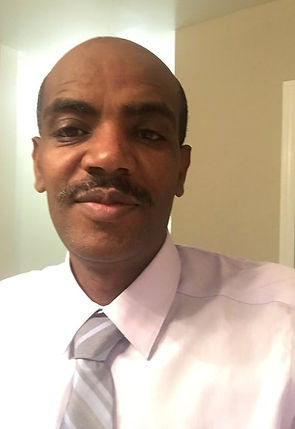
Chalachew is a seasoned Data Scientist and Econometrician with extensive expertise in quantitative analysis, machine learning, econometrics, data engineering, exploration, and visualization to inform strategic decision-making. Holding a PhD in Economics/Econometrics, he has over 10 years of experience leveraging advanced programming tools, including R, SAS, Python, and SQL to deliver data-driven analytical solutions for both commercial and government sectors. Previously, he worked as a Senior Economics and Data Analytics Consultant at the World Bank in Washington, DC. Dr. Chalachew has taught several data courses, including machine learning, data science, and data-driven decision-making at the University of Maryland (UMGC and UMBC) and Trine University. He is also collaborating with researchers at the Social Innovation and Impact Institute, contributing his expertise in data science and programming.
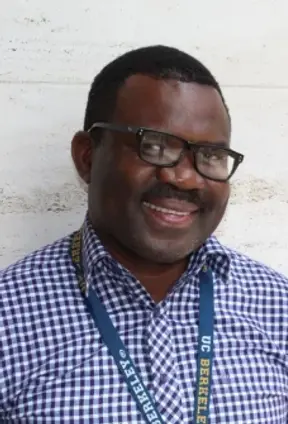
Dr. Werner was a country representative for the Social Innovation and Impact Institute in Tanzania and leads the Strategic Information Unit at the National AIDS, STIs, and Hepatitis Control Program under the Ministry of Health. A medical epidemiologist, he has extensive experience in infectious disease research, health system implementation, and evaluating health interventions in developing countries. He is also an honorary lecturer in Epidemiology and Biostatistics at Muhimbili University of Health and Allied Sciences. Dr. Werner holds an MD from the University of Dar es Salaam, an MSc in Tropical and Infectious Diseases from the Liverpool School of Hygiene and Tropical Medicine, and a PhD in Epidemiology from Kilimanjaro Christian Medical University College. He completed a postdoctoral fellowship at the University of Virginia, studying TB and malnutrition interactions. His achievements include designing clinical trials that helped scale up Intermittent Preventive Treatment for Infants (IPTi) to combat malaria and anemia, and TB preventive therapy for people living with HIV.